
What Piano Should I Buy for My Child? A Parent Guide to Keyboards, Digital Pianos, and Acoustic Pianos
Choosing a piano for your child should not require a music degree, a second mortgage, or a Facebook Marketplace adventure involving three relatives and a borrowed truck.
Buy too little, and your child may outgrow it fast. Buy too much, and you may end up with a very expensive piece of furniture.
Here is how to choose one without overbuying, underbuying, or accidentally adopting a 700-pound living room project.
Choosing a piano for your child should not require a music degree, a second mortgage, or a Facebook Marketplace adventure involving three relatives and a borrowed truck.
Buy too little, and your child may outgrow it fast. Buy too much, and you may end up with a very expensive piece of furniture.
For most beginners, the safest starting point is a good digital piano.
Here is how to choose one without overbuying, underbuying, or accidentally adopting a 700-pound living room project.
First, know what you are actually shopping for
Most families call anything with black and white keys a keyboard. That is completely normal. The piano world could have named things more helpfully, but here we are.
For piano lessons, though, the better search term is usually digital piano.
A keyboard is usually light, portable, and full of extra sounds and buttons. That can be fun, but many keyboards have fewer than 88 keys, lighter key action, weaker speakers, and a feel that does not prepare the child very well for piano playing.
A digital piano is built to act more like a piano. It usually has 88 keys, weighted action, a better piano sound, and a more stable playing experience.
A basic keyboard can work for a preschooler or a brand-new beginner for a short time. But once your child is using both hands, playing louder and softer, moving around the keyboard, or learning to use the pedal, the instrument starts to matter more.
The simple answer
For most beginners, buy an 88-key weighted digital piano from Yamaha, Roland, Kawai, Casio, or Korg.
Make sure it has:
88 keys
fully weighted keys
touch sensitivity
at least 64-note polyphony, with 128 or more preferred for a longer-term instrument
a sustain pedal
a stable stand
a bench at the right height
Polyphony is the number of sounds the piano can produce and sustain at once, including notes that continue ringing while the pedal is held. At least 64-note polyphony can work for a beginner, while 128 or more gives a student more room for sustained notes, layered sounds, and increasingly complex music. Polyphony matters, but a higher number does not automatically mean the piano has better keys, sound, or overall quality.
Everything after that is about how long you want the instrument to last, how serious the student is, and how much you want the piano to feel like an acoustic instrument.
What to buy by budget
Under $200: only if you need the lowest possible starting point
This is the “we need something in the house by Tuesday” category.
It can work for a preschooler, a very new beginner, or a family that needs to start as inexpensively as possible. Look for touch-sensitive keys, at least 61 keys, a sustain pedal input, and a setup that does not wobble.
For a school-age beginner or teen, this should be a bridge, not the plan. It can help your child learn the layout of the keys and practice simple songs, but it will start feeling limited quickly.
What it does well: gets a child started.
What it does not do well: support developing piano technique for long.
For most school-age beginners, expect this to be temporary. Plan to upgrade when the limited range, lighter action, or unstable setup begins to interfere with what your child is learning.
$200-$500: acceptable short-term beginner option
This range can work for a new beginner, especially if you find a used instrument from a trusted brand.
Look for 88 keys if possible, touch sensitivity, at least 64-note polyphony, a sustain pedal, a sturdy stand, and a bench at the right height. Fully weighted keys are ideal. Semi-weighted keys can work as a temporary compromise, but they do not feel or respond like a piano. If you hope to use the instrument for more than a short introductory period, 128-note polyphony is a better choice.
This is a practical first step for families who want to begin lessons without making a larger purchase immediately. The important thing is that your child has something at home and can practice between lessons.
The tradeoff is feel. The keys may be lighter, the speakers weaker, the pedal less stable, and the sound less satisfying. That does not mean the instrument is useless. It means your child may outgrow it sooner.
Plan to upgrade when the action, pedal, speakers, or overall stability begin to limit what your child is learning. For some students that may happen within a year, while a good used instrument from a trusted brand may last longer.
$500-$1,200: the first range I usually recommend for regular lessons
This is the lowest range where families usually start finding digital pianos that can support regular lessons well.
Look for fully weighted keys, at least 128-note polyphony, better touch response, stronger speakers, a more piano-like feel, and a pedal that does not slide away every time your child uses it.
This range is often the best starting point for a beginner. It gives your child a real piano experience without asking the family to buy a high-end instrument before anyone knows how far piano will go.
For a young beginner, this may last a while. For an older beginner, a fast-moving student, or a child already playing late-beginner music, it may start to feel limited sooner.
Many students can use a good instrument in this range for several years. Consider upgrading when the student’s technique, repertoire, or musical goals begin to exceed what the key action, pedal system, or speakers can support.
$1,200-$2,000: the strong family choice
This is where a digital piano starts to feel less like starter equipment and more like a real household instrument.
Digital pianos in this range usually have better key action, generous polyphony, fuller sound through stronger speakers, a sturdier stand, a three-pedal unit, and more responsive note repetition.
Students are not just learning which notes to press. They are learning how to control sound. Better keys help them play evenly. Better speakers make practice more satisfying. A stable pedal and stand make the setup feel less like equipment and more like a piano.
This is a good range for motivated beginners, older beginners, and students who have played long enough that you can tell piano is going to stick around.
Plan to keep this instrument for several years.
$2,000-$4,000: for committed and growing students
This range is not about adding more buttons. It is about making the piano respond better.
Look for generous polyphony, more realistic key action, stable built-in pedals, half-pedaling, stronger speakers, more natural resonance, and possibly wooden keys or longer keys with a more natural pivot.
This range makes sense for committed students, intermediate students, and families who want an instrument that will not need to be replaced quickly.
It is also a good range for families who do not want an acoustic piano but want the daily experience to feel serious.
$4,000 and up: top-tier digital piano or acoustic alternative
Above $4,000, digital pianos are built as serious instruments, designed to deliver a refined, responsive, and musically satisfying playing experience.
Look for top-tier key action, longer keys with a more acoustic-like pivot point, wooden or hybrid key construction, detailed pedal response, advanced sound modeling, excellent speakers, strong resonance, generous polyphony, and an especially responsive playing experience.
At this level, small details matter. The keys respond to subtle changes in touch. The pedal changes the sound in more nuanced ways. The tone has more depth and warmth. The instrument feels more alive under the hands.
The main thing still missing from most digital pianos is physical: real hammers striking real strings inside a wooden body. An acoustic piano vibrates in the room because it produces sound through strings and a soundboard. High-end digital and hybrid pianos can recreate that experience impressively well. Some hybrids even use acoustic-style actions, but the sound still comes from sensors, speakers, samples, or modeling rather than strings.
For many families, that tradeoff is worth it. A high-end digital piano stays in tune, works with headphones, requires less maintenance, and is much easier to live with.
This range is best for advanced students, serious teen musicians, adult players who care about feel, or families who want a long-term instrument without the tuning, moving, volume, and maintenance issues of an acoustic piano.
Do you really need a stand and bench?
Yes, and this is one of the easiest things to underestimate.
A keyboard on the kitchen table can work for the first few lessons, but it usually becomes frustrating pretty quickly. Most tables are the wrong height for piano. Kitchen chairs are often too low, too high, or too far away. Then the child ends up reaching, hunching, lifting their shoulders, or letting their wrists collapse.
That makes piano feel harder than it actually is.
A simple stand and bench give your child a setup that feels the same every time they practice. The keys stay at the right height, and their arms can move naturally. Younger children may also need a footstool, foot support, or pedal extender so their feet are not dangling. If they are using a pedal, they should be able to reach it without twisting or sliding around.
You do not need a beautiful furniture-style stand right away. You do not need a fancy adjustable bench. But you do need something sturdy, comfortable, and repeatable.
If the keyboard wobbles, the chair is the wrong height, or the pedal keeps sliding away, your child is not just practicing piano. They are fighting the setup.
Brands I would look for first
The safest digital piano brands for most families are:
Yamaha
Roland
Kawai
Casio
Korg
Nord
Yamaha is reliable, popular, and easy to find. Roland is strong in digital features and responsive actions. Kawai is especially respected for piano touch. Casio often gives families excellent value. Korg can be a solid choice, especially in portable digital pianos. Nord makes excellent professional-quality instruments, particularly for advanced students, performers, and families who want a premium stage piano, though many models do not include built-in speakers.
The best choice depends on the student, the budget, and how the instrument feels and sounds.
If possible, try a few in person. Some students immediately respond to one piano more than another.
Brands I would be cautious about
For a child’s main practice instrument, I would be cautious with ultra-budget keyboards and unfamiliar marketplace models, especially when the listing emphasizes hundreds of sounds, lights, accessories, or a large “beginner bundle” more than the actual feel of the keys.
Some lower-priced instruments from brands such as Alesis, Williams, Suzuki, Donner, RockJam, Starfavor, Best Choice Products, Longeye, Moukey, Eastar, The ONE, Hamzer, Costzon, Vangoa, and Kmise may work temporarily. However, I would evaluate the exact model carefully rather than relying on the brand name, accessory package, or number of advertised features.
I would not usually choose them as a child’s main long-term practice piano.
For regular piano lessons, families usually get better long-term value from Yamaha, Roland, Kawai, Casio, Korg, or Nord. The cheapest option is not always the cheapest if your child outgrows it quickly.
What about acoustic pianos?
A good acoustic piano can be wonderful.
A free acoustic piano can be a trap.
That sounds dramatic, but this is where many families get surprised. The piano is free. The moving, tuning, and repairs are not. And after all that, the piano still may not be a good instrument.
Before taking a used acoustic piano, ask
When was it last tuned?
Has it been tuned regularly?
Does it hold its tuning?
Do all the keys work?
Do any keys stick?
Do the pedals work?
Does it smell musty?
Has it been stored in a damp basement, garage, or storage unit?
Has a piano technician looked at it?
A used acoustic piano may need moving, tuning, repairs, regulation, or more than one tuning before it is stable.
The problem is that neglected acoustic pianos are common.
A good acoustic piano has a clear tone, working keys, responsive pedals, and the ability to hold tune. An acoustic piano in poor condition can make practice discouraging and expensive.
The fair acoustic vs. digital comparison
The fair comparison is not a beautiful, maintained acoustic piano against a cheap keyboard.
The fair comparison is between the instruments your family can realistically afford, maintain, move, tune, and enjoy using every day.
For many families, a good digital piano gives the child the better daily experience. It stays in tune. It works with headphones. It takes up less space. It is easier to move. It needs less maintenance. It sounds consistent every time your child sits down.
A quality acoustic piano can be a treasure.
But the best piano is not the one that sounds impressive in theory. It is the one your child can use well, often, and without frustration.
A careful note on payment plans
A good instrument can be a large purchase, especially when your family is already budgeting for lessons.
Some music stores and online retailers offer true 0% financing or deferred-interest payment plans. If you use one, read the terms carefully, set up automatic payments, and make sure the balance will be paid in full before the promotional period ends. With deferred-interest financing, missing that deadline can result in substantial interest charges.
A payment plan can help a family choose the right instrument sooner, but only if the monthly payment fits the budget.
The goal is not to turn piano into financial stress. The goal is to avoid buying too low, upgrading too soon, and spending more than you meant to spend.
Looking for piano lessons in Fort Wayne?
Grace’s Piano Studio offers piano lessons for kids and teens, including Core and Leadership Programs for Kids and Teens and Petite Pianists Preschool Piano.
Families who are just getting started can also book a free trial piano lesson in Fort Wayne.
Still unsure what to buy? I am always happy to help families choose an instrument that fits their child, their space, and their budget.
What’s the Best Age to Start Piano Lessons? A Fort Wayne Teacher Explains
The best age to start piano lessons depends less on the number and more on the fit, because the goal isn’t just to start piano. The goal is to begin in a way that makes a child want to come back next week!
A 4-year-old sits at the piano and proudly finds every C.
A 6-year-old plays two notes, slides off the bench, and announces that he’s starving.
A 5-year-old remembers last week’s song perfectly, but still wants Mom close enough to peek at through the doorway.
And a 3-year-old marches across the room singing a tune no one remembers teaching her.
This is why the question “What’s the best age to start piano lessons?” is both practical and tricky.
Children don’t all become ready for music on the same birthday. Some are ready for real piano lessons at 4 or 5, while others are 6 and still need music to arrive with movement, games, stories, and plenty of room to wiggle.
Both kinds of children can become wonderful musicians. They just need the right beginning.
At Grace’s Piano Studio in Fort Wayne, I don’t look at age alone when I help a parent decide where a child should start. I look at the child. Are they curious? Do they like structure? Do they need to move? Can they be away from a parent? Do they want to learn songs? Do they light up when they hear music?
The best age to start piano lessons depends less on the number and more on the fit, because the goal isn’t just to start piano. The goal is to begin in a way that makes a child want to come back next week!
Music Begins Before Lessons Do
A child’s musical life doesn’t begin on a piano bench.
It begins in the backseat, when a favorite song comes on and suddenly a small voice knows every word. It begins with lullabies, silly songs, church songs, nursery rhymes, clapping games, kitchen dance parties, and the little made-up melodies children sing while they play.
Long before a child can name a note, they’re already learning music.
They’re feeling the beat before they can count it. They’re hearing patterns before they can explain them. They’re learning that music can be exciting, peaceful, funny, dramatic, beautiful, comforting, and full of life.
That’s a wonderful beginning.
So if your child isn’t ready for formal piano lessons yet, you’re not behind. There’s so much you can do before the first lesson ever happens.
Sing in the car. Dance in the kitchen. Clap to music. Play beautiful songs at home. Let music feel like part of ordinary family life.
The piano lesson can come later, but the love of music can start now.
For Little Kids, Play Is Serious Learning
For children through age 5, music should feel like play.
Not because the learning is light, but because play is how young children do some of their best learning.
A preschooler in music class is learning much more than rhythm and finger numbers. They’re also learning how to listen to another adult, take turns, try something new, recover from mistakes, follow a routine, and stay with an activity a little longer than they would on their own.
That’s a lot for a little person!
And it usually happens best through songs, movement, rhythm games, piano exploration, imagination, and short activities that keep changing before the room turns into a parade of wiggles.
A good early music class doesn’t expect a 3- or 4-year-old to act like an 8-year-old with tiny hands. It teaches real musical skills in a way that feels natural to childhood.
Sometimes that means singing. Sometimes it means clapping. Sometimes it means pretending to be animals while learning high and low sounds. Sometimes it means finding groups of black keys like a little piano game. And sometimes it means changing the plan at exactly the right second, because the teacher can feel the class starting to drift.
It may look playful from the outside, but underneath the fun, real learning is happening.
My Petite Pianists program was created for this stage. Children learn rhythm, singing, movement, listening, keyboard patterns, finger numbers, musical opposites, and beginning piano concepts in a way that feels joyful and age-appropriate.
They’re building the foundation for future piano lessons, and they’re having fun while they do it!
The First Goal Is Love
For very young beginners, the first goal isn’t perfect practice. It’s love.
Of course, practice matters. Piano eventually requires repetition, patience, listening, and steady effort. But those habits grow so much better when a child already feels connected to music.
A child who loves music will return to it. They’ll sit down again. They’ll try again. They’ll want to show you what they learned. They’ll begin to feel that music belongs to them, not just to the teacher or the lesson book.
A child who feels pressured too early may decide piano isn’t for them before they’ve really had a chance.
That’s why the first musical experiences matter so much.
A child’s first music class should help them think, “I can do this. I like this. I want to try again.”
That little spark is what we want to protect.
Practice Can Be Wonderful, If It Stays Happy
Preschool practice can help, but it can also become too much, too soon.
A few happy minutes at the piano can be wonderful. A sticker, a tiny prize, a cheerful “show me what you learned,” or a proud little performance for the family can make practice feel exciting.
But forced practice at this age can backfire quickly.
A young child may not understand that a parent is trying to build a habit. They may only feel the pressure, and then piano starts to feel like the hard part of the day instead of the happy part.
For preschoolers, practice should be short, light, and positive. If it feels fun, wonderful. If it turns into a daily battle, it’s usually better to step back.
There will be time later for stronger practice habits. In the beginning, we’re protecting something very important: the child’s relationship with music.
When an Early Music Class Is the Right Fit
A child may be ready for music long before they’re ready for regular piano lessons.
This is the child who loves songs, movement, sound, and rhythm, but still learns best through play. It’s the child who can focus beautifully for a few minutes and then suddenly needs a new activity. It’s the child who is bright, curious, and musical, but not quite ready for a traditional lesson format.
An early music class may be the right fit if your child:
Enjoys singing, dancing, clapping, or moving to music
Learns best through play and imitation
Can focus for a few minutes at a time, even if not predictably
Knows or is beginning to learn the letters A-G
Can count to 5
Is curious about the piano
Needs frequent changes of activity
Is still learning how to be away from a parent
Would enjoy music more with movement, games, and variety
This is what Petite Pianists is for.
It gives young children a real foundation without asking them to grow up too fast. They learn rhythm, listening, finger numbers, keyboard awareness, class skills, and confidence. They learn how to participate. They learn how to try. They learn how music feels in their hands, ears, voices, and bodies.
And because the class is designed for young children, they get to learn all of that in a way that feels fun!
When Regular Piano Lessons Make Sense
A child may be ready for regular piano lessons when they’re beginning to enjoy a little more structure.
Not stiff, silent, perfect structure. Just enough structure to follow a path.
They can work on one skill for a little while. They can listen to a teacher’s direction. They remember some of what happened last week. They want to learn more songs, and they like the idea of doing something that feels a little more grown-up.
A child may be ready for a regular piano program if they:
Can be away from a parent during class, even if the first few weeks take adjustment
Remember some of what they learned from week to week
Can follow simple directions from a teacher
Show interest in learning more songs at the piano
Can focus long enough to work on one skill at a time
Like patterns, books, worksheets, or “big kid” learning
Are ready for more routine
Enjoy the idea of learning new songs every week
Reading helps, but it’s not required.
Children can learn to read music before they can read words. They can learn that notes move up and down, that rhythms have patterns, that fingers have numbers, and that the music on the page connects to what they play on the piano.
It just takes more teacher guidance.
A child who is already reading may be able to move through written music more quickly because they’re used to tracking symbols from left to right, recognizing patterns, and connecting printed information to meaning. A child who isn’t reading yet can still learn those skills, but the teacher usually needs to spend more time building that connection step by step.
That’s why reading is helpful, but not a requirement. A young child can absolutely begin learning real piano skills before they’re reading fluently. We just move at the pace that helps the music make sense.
In my Core Piano Program for kids and teens, students build real piano skills in a structured, encouraging environment. They learn to read music, recognize patterns, build technique, practice efficiently, and become more independent at the piano.
But the heart of the program isn’t just finishing pages in a book. I want students to become quick, confident learners who know how to use music at every level - not just during lessons, but in a way they can enjoy for years.
That’s why we include music students actually love. Favorite songs, familiar melodies, and music that feels exciting to them help students connect their skills to something personal. As they grow, they learn not only how to play the piano, but how to keep learning music they care about.
What About Ages 4 and 5?
Ages 4 and 5 are often where parents feel the least sure.
And honestly, that makes sense. Some children this age are ready for the Core Piano Program, while others still do best with the playful structure of Petite Pianists.
My website lists Core for ages 6-18 because age 6 is a helpful general guideline. But I also have several 5-year-olds in Core right now, and two of them started Core at age 4.
So yes, younger children can be ready! I just don’t assume readiness from age alone. If a child is interested, comfortable separating from a parent, able to follow simple directions, and beginning to remember what they learned from week to week, Core may be a wonderful fit.
If they still need more movement, shorter activities, and playful learning, Petite Pianists may give them a stronger and happier beginning.
School Experience Changes the Picture
One pattern I’ve noticed over the years is that school experience affects piano readiness.
Children who attend preschool often adjust to structured piano lessons earlier. Not because they’re more musical, but because they’ve already practiced the hidden skills lessons require: separating from a parent, listening to another adult, following a routine, participating in a group, and working through small challenges.
Children who begin school in kindergarten, or children who are homeschooled, may need more time to grow into that structure.
That’s not a bad thing. It’s simply a different starting point.
I homeschool my own 3-year-old daughter, and I see this from both sides. In some areas, she’s ready for higher-level learning, which she can experience in the Core program. In other areas, she benefits from Petite Pianists because it gives her practice with class routines, structure, and being with children her age.
That combination fits her right now, and another child might need something completely different.
This is why I don’t believe every child should begin in exactly the same place. The best starting point is the one that fits the child in front of us.
So, What Is the Best Age to Start Piano Lessons?
By age 6, most children are ready for Core Piano.
Some children are ready earlier, especially at 4 or 5. But I don’t usually recommend waiting past age 6 to begin a structured piano program. By that age, children are ready to build strong piano skills with guidance, routine, and music they actually enjoy.
Before age 6, I highly recommend some kind of music program.
The early years are such a rich time for music. Young children are listening, moving, singing, noticing patterns, and building the foundation they’ll use later at the piano. A playful early music class can make the transition into Core smoother, happier, and more natural.
Here’s the easiest way to think about it:
Through age 5: A playful early music and piano class is often the best fit. Children this age usually need movement, variety, imagination, and short activities while they build real musical skills.
Ages 4-5: Some children are ready for Core earlier, especially if they’re interested, comfortable separating from a parent, able to follow simple directions, and beginning to remember what they learned from week to week.
Age 6 and up: Children are ready for Core Piano. At this age, I recommend beginning a structured piano program rather than waiting for some perfect future version of readiness.
Children don’t need to be fully mature, fully independent, or fully reading before they begin learning piano. They need the right teacher, the right class, and a beginning that helps them enjoy the process while building skills that last.
Frequently Asked Questions About Starting Piano Lessons
What is the best age to start piano lessons?
Most children are ready for Core Piano by age 6, and some are ready earlier at 4 or 5. For younger children who still need more movement, play, and variety, an early music and piano class is usually the best beginning.
Can a 3-year-old take piano lessons?
Yes, but most 3-year-olds do best in an early music and piano class with singing, movement, rhythm games, short piano activities, and lots of variety.
Can a 4-year-old start piano lessons?
Some 4-year-olds may be ready for Core Piano, especially if they’re interested, comfortable away from a parent, able to follow simple directions, and beginning to remember what they learned from week to week.
If they still need more movement, play, and shorter activities, Petite Pianists is usually the stronger beginning.
Can a 5-year-old take piano lessons?
Yes! Many 5-year-olds are ready for Core Piano, while others still do beautifully in Petite Pianists. The best fit depends less on the birthday and more on the child.
Does my child need to read before starting piano?
No. Children can learn to read music before they can read words. Reading helps students move through written music more quickly, but it isn’t required. If a child isn’t reading yet, we simply build the connection between the page and the piano step by step.
What if my child is nervous about being away from me?
That’s very normal. Some children adjust quickly, and others need more time. If a child is still very uncomfortable separating from a parent, an early music class may be a gentler first step before regular piano lessons.
What if my child is very interested in piano but still young?
Interest matters. A young child who is drawn to the piano, makes up songs, sings constantly, or asks to learn may be ready for Petite Pianists or even Core, depending on their focus and independence.
Choosing the Right Beginning
Parents don’t have to figure out piano readiness alone - that’s part of my job! At Grace’s Piano Studio in Fort Wayne, I help families decide whether a child is ready for Petite Pianists or Core Piano by looking at how they learn, what keeps them engaged, and what kind of class will help them feel successful.
Some children are ready to jump into Core and start building independence at the piano. Others will have a much happier beginning in Petite Pianists, where music comes with movement, games, singing, and plenty of variety. Both paths can lead to confident, joyful piano students when the fit is right.
My goal is for children to become independent, quick learners who know how to use music in a way they genuinely enjoy. That’s why we include favorite songs and familiar music along the way - because piano should feel useful, personal, and fun, not like something that only lives in a lesson book.
Whether your child starts with a playful first music class or moves right into Core, I want their first experience to feel successful, exciting, and full of possibility. Piano should be fun from the beginning, and the right beginning can make all the difference!
-Grace
Learn more here:
The Secret Behind Students Who Actually Practice: Piano Lessons Fort Wayne Parents Trust
If you’ve ever wondered why some kids stick with piano while others slowly lose interest, it almost always comes down to one thing.
Not forced, miserable practice - but something much more sustainable.
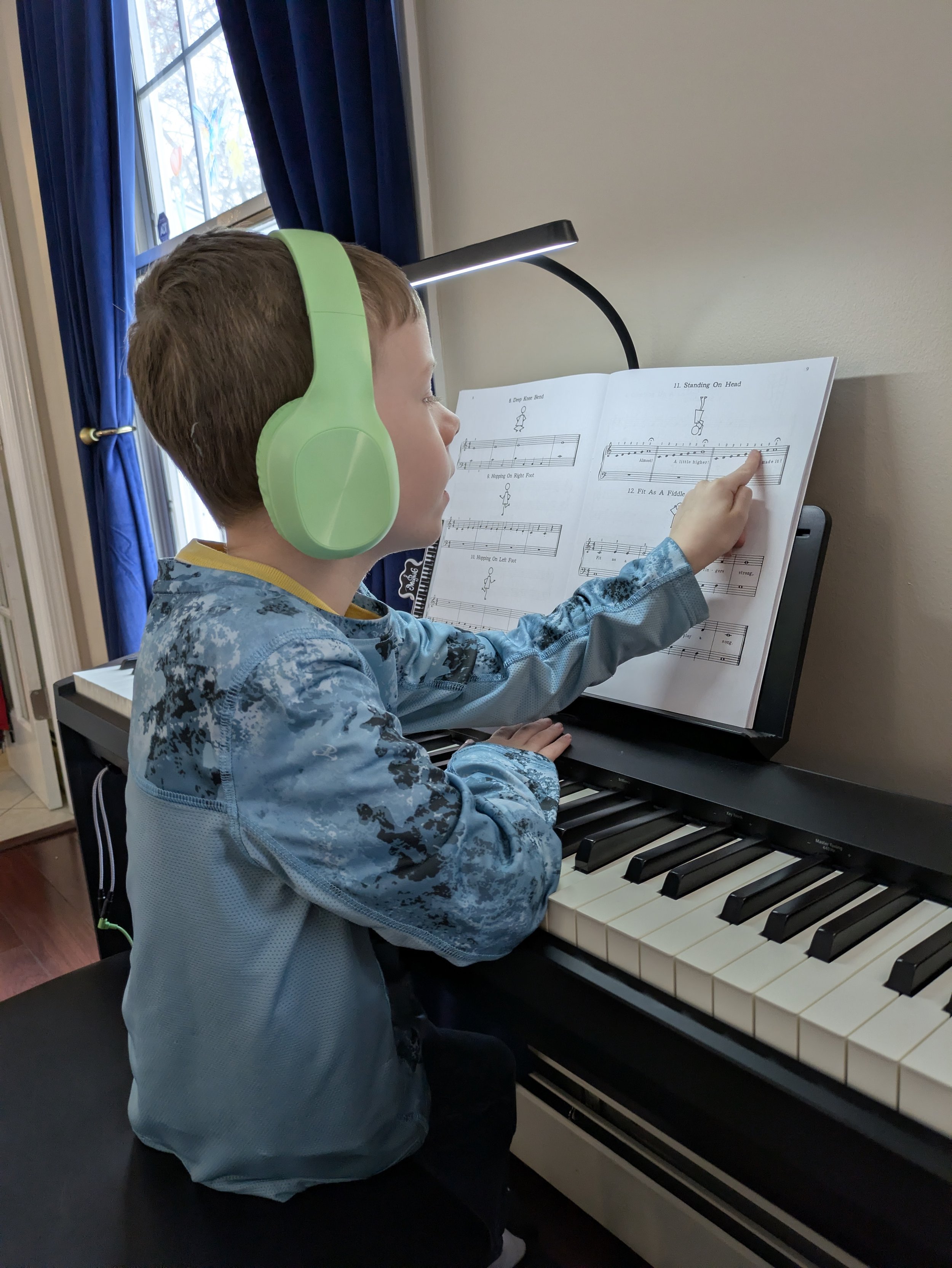
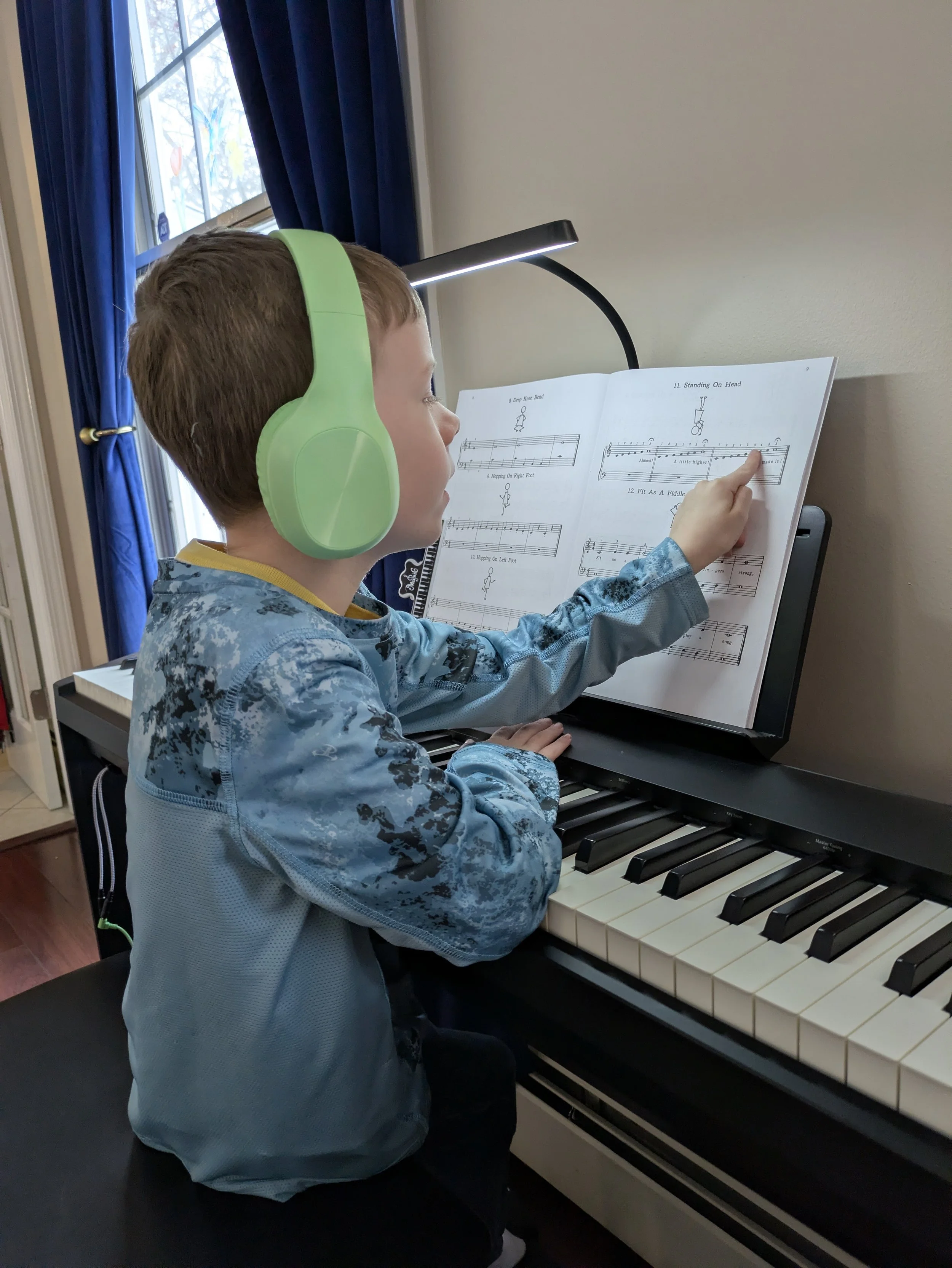
a student practicing at the piano during their lesson
If you’ve ever wondered why some kids stick with piano while others slowly lose interest, it almost always comes down to one thing:
Practice.
Not forced, miserable practice - but consistent, motivated, self-driven practice.
Over the past several years, I’ve made it a priority to figure out what actually works. I’ve tested different systems, adjusted my teaching, and refined things again and again until I found what actually works.
Right now, about 90% of my students are practicing regularly, which is the highest it’s ever been in my studio.
And it’s not because I require it. Most students don’t respond well to that long-term.
It’s because I’ve learned how to motivate it in a way that actually lasts.
First - A Thank You to Parents ❤️
Before anything else, I want to say this clearly:
If you are the parent who reminds your child to practice, helps them stay consistent, or sits with them when they’re frustrated, you are doing something incredibly important.
Yes, it helps them improve at piano.
But more than that, you’re teaching them how to follow through, how to work through something difficult, and how to stay committed even when they don’t feel like it.
You’re there in the moments I’m not.
When they’re bored.
When they’re frustrated.
When they want to quit.
That’s character development. And it’s powerful.
Where Things Go Wrong
Here’s what I’ve seen over and over again:
When practice becomes something a child has to do, but doesn’t enjoy at all, it works for a little while… and then it doesn’t.
They might comply in the beginning. But eventually the resistance builds, the motivation drops, and piano starts to feel like a chore instead of something they’re proud of.
Requiring practice without enjoyment is one of the fastest ways to burn a student out.
That’s why I don’t build my studio around pressure.
In my approach to piano lessons in Fort Wayne, everything is designed around helping students actually want to practice.
My Role as a Teacher
Not every parent has the time or energy to manage practice every single day.
And that’s okay.
That’s exactly why I see my role as more than just teaching notes and songs.
Part of my job is to help students become the kind of people who can stick with something, work through challenges, and feel proud of their progress.
That means I don’t rely on parents to carry everything.
I don’t force practice either.
I build an environment where students feel capable, supported, and motivated enough that practice starts to happen naturally.
What’s Actually Working
There isn’t one magic solution, but there are a few things that have made a huge difference.
One of the biggest is simply making sure parents have clear, accurate insight into what their child should be doing at home.
In my studio, parents aren’t left guessing. They can see exactly what their child is working on, and they have access to videos showing what it should sound like. That alone removes a lot of uncertainty and makes practice time much smoother.
We also talk openly about why regular practice matters - not just to “keep up,” but because it’s what allows students to really grow and get the most out of their piano lessons over time.
And when questions come up (because they always do), families don’t have to wait until the next lesson.
Parents can message me anytime, send a quick video, or ask a question instead of waiting a full week for help, and I can step in right away to guide things in the right direction.
I genuinely love when families do this, because it allows me to support students throughout the week, not just during their lesson.
That kind of communication changes everything. It keeps students from getting stuck, helps parents feel confident in how to help, and makes practice feel far less frustrating for everyone involved.
Another big piece is the music itself. I make a point to include music students genuinely enjoy, not just standard assignments. When a student loves what they’re playing, practice stops feeling like something they have to do and starts feeling like something they want to come back to.
If you’re curious what that looks like in real lessons, you can take a look here:
👉 https://www.gracespianostudio.com/piano-lessons-in-fort-wayne
There’s also a strong sense of community in the studio. Students can see their own consistency, notice how others are progressing, and naturally feel motivated to keep up. It’s a positive kind of peer influence that doesn’t require pressure.
Performances play a role too. When students know they’ll be sharing what they’ve learned, they take more ownership of their progress and feel a real sense of pride in what they accomplish.
And of course, I check in on practice every single lesson. Not in a way that creates guilt, but in a way that reinforces the idea that this is just part of being a musician.
The Bigger Goal
Yes, I want my students to become strong pianists.
But more than that, I want them to become consistent, motivated, resilient, and confident in their ability to stick with something.
Because that doesn’t just stay at the piano.
It shows up in school, in other activities, and eventually in the way they approach bigger goals in life.
If You’re Looking for Piano Lessons in Fort Wayne
If you’re actively able to help your child practice, even when it’s not easy, you are making a bigger impact than you probably realize.
If you’re not able to be as hands-on every day, that’s okay too.
That’s exactly why I’ve built my studio the way I have - so students are supported both at home and throughout the week, not just during their lesson.
When that support is in place, practice starts to feel less like a battle at home.
And that’s exactly why many of my students continue with piano for years.
If you’re exploring piano lessons in Fort Wayne and want something that supports your child beyond just the weekly lesson, you can learn more here:
🎹 Ages 3-5 (Petite Pianists):
https://www.gracespianostudio.com/kids-piano-lessons-fort-wayne
🎹 Ages 6-18:
https://www.gracespianostudio.com/piano-lessons-in-fort-wayne
What I Want for My Students
You shouldn’t have to fight your child to practice.
With the right support, the right environment, and the right kind of motivation…
They start to do it on their own.
Grace
Piano Teacher, Grace’s Piano Studio

Why Piano Lessons Are More Popular in Fort Wayne Than Ever Before
Piano lessons in Fort Wayne are gaining popularity for a variety of reasons, from the growing recognition of music’s educational benefits to the supportive communities that are forming around music programs. At Grace's Piano Studio, we’re seeing firsthand how music education positively impacts kids. Click to explore why piano lessons are becoming a top choice for families and how our studio is part of this exciting movement.

Piano lessons in Fort Wayne are more in demand than ever, and it’s easy to see why families are prioritizing music education for their children. With the increasing recognition of the many benefits music offers, including building confidence, focus, and creativity, more parents are turning to piano as a way to give their kids an edge.
Here's why piano lessons are soaring in popularity, and why Grace’s Piano Studio is the premier choice for families who want the best for their child's musical development:
Fort Wayne’s Growing Music Education Landscape
Fort Wayne is making significant strides in expanding music education. Purdue University Fort Wayne is constructing a $25 million, 26,000-square-foot music facility to support growing music programs, including piano. This investment reflects Fort Wayne's commitment to fostering musical talent and supporting the city’s goal of becoming a top-10 music city by 2031. This influx of resources for music education makes now the perfect time for your child to take piano lessons.
Explosive Growth in Music Enrollment
Enrollment in local music programs has seen remarkable growth. At Purdue University Fort Wayne, music enrollment has increased nearly 400%, with the School of Music expanding from just 33 students in 2018 to 147 students in the current academic year. This surge in interest highlights the growing recognition of the value of music education, making piano lessons more popular than ever. Parents in Fort Wayne are eager to provide their children with the same opportunities, ensuring their kids have the chance to explore and excel in music.
Strong Community Support for Music Education
Fort Wayne’s community initiatives like the "b Instrumental" program are helping to make music education accessible to more children. The program provides instruments and music education to students who might not otherwise have access. This community support ensures that kids have the opportunity to discover the joy of music, and as a result, more families are seeking out piano lessons to give their children a head start in a supportive, music-friendly environment.
Why Grace’s Piano Studio Is the Elite Choice
When it comes to piano lessons in Fort Wayne, Grace’s Piano Studio stands above the rest for many reasons:
Personalized Lessons: At Grace’s Piano Studio, I take the time to understand each child’s individual learning style and goals. I customize every lesson to meet their unique needs, whether they’re beginners or already advanced. This personalized approach ensures that each student is learning at the right pace and that they stay motivated and excited to practice.
Elite Instruction: With over 15 years of experience, I offer a comprehensive and flexible approach to teaching piano. My lessons focus on both technique and music theory, but I also help students develop musical creativity and self-expression. As a result, students not only learn how to play piano but also develop valuable skills that last a lifetime.
Proven Success: My students have gone on to achieve remarkable success, both in music and in life. Many have pursued professional music careers, and others have performed in prestigious settings, including recitals, competitions, and college music programs. The skills they develop through piano—such as discipline, problem-solving, and patience—carry over into all areas of their lives.
Community and Motivation: One of the most powerful aspects of my studio is the sense of community students gain through their practice app. This innovative tool connects students with others in the studio, allowing them to compete in friendly challenges, earn rewards, and celebrate each other’s progress. Students can track their streaks, earn gems, and share their accomplishments, making the learning process even more engaging. This sense of community and camaraderie keeps students motivated, fostering a deeper love of music and learning.
Flexible Learning Options: Whether your child thrives in private lessons or enjoys the energy of small group settings, I offer both options to suit their learning preferences. With flexible scheduling, your child can progress at their own pace while enjoying a supportive and inspiring environment.
Why Choose Grace’s Piano Studio?
I’ve dedicated my life to teaching music because I believe it has the power to transform lives—building confidence, discipline, and creativity. This commitment has resulted in incredible pianists who perform with excellence and pursue music professionally. At Grace’s Piano Studio, I provide personalized instruction, motivational tools, and a supportive community to ensure every student achieves their fullest potential.
Click here to schedule your free trial lesson today and find out why Grace’s Piano Studio is the best choice for piano lessons in Fort Wayne.

How to Choose the Best Piano Teacher for Your Child or Teen in Fort Wayne
Finding the right piano teacher is about more than just music—it’s about discovering someone who will nurture your child’s creativity, build their confidence, and guide their growth. Whether your child is a total beginner or ready for more advanced work, this guide will help you choose a piano teacher in Fort Wayne who’s the perfect fit.
If you’re searching for piano lessons in Fort Wayne, this guide is here to help you sort through your options with clarity and confidence.

Choosing A Piano Teacher in Fort Wayne
Finding the right piano teacher is about more than just music—it’s about discovering someone who will nurture your child’s creativity, build their confidence, and guide their growth. Whether your child is a total beginner or ready for more advanced work, this guide will help you choose a piano teacher in Fort Wayne who’s the perfect fit.
If you’re searching for piano lessons in Fort Wayne, this guide is here to help you sort through your options with clarity and confidence.
1. Start with Your Child’s Goals and Interests
What does your child want to get out of piano lessons? Do they want to play popular songs? Read sheet music? Improve technique? Start composing? A good teacher should be able to adapt to those goals and guide your child in a way that feels meaningful to them. Thinking through your child’s preferences from the start will help you identify teachers who offer the flexibility and creativity to match.
2. Look for a Strong Foundation in Theory and Technique
Even if your child wants to focus on fun or familiar songs, it’s important they learn proper technique and understand the basics of music theory. This foundation is what allows students to confidently progress into more advanced pieces and become independent musicians over time. The best teachers weave these elements into lessons naturally—so students grow their skills without feeling overwhelmed.
3. Look for Tools That Motivate Practice
Practicing at home can be one of the biggest challenges—but it doesn’t have to be. Many modern teachers use motivational systems that keep students engaged outside of lesson time.
At Grace’s Piano Studio, I use the Practice Space app, which encourages students with practice streaks and rewards them with gems they can use on fun upgrades. It also helps students feel like they’re part of a community, as they can see other kids from the studio practicing and growing too. This sense of connection boosts motivation and creates a sense of shared success.
4. Check the Studio Atmosphere
Your child should feel comfortable, encouraged, and inspired in their lesson space. Is it clean, calm, and set up for learning? Are materials accessible and age-appropriate? Is the teacher patient and positive? A welcoming studio atmosphere makes a big difference in how a child connects with lessons—and whether they look forward to coming back.
5. Consider Location and Convenience
When you’re balancing school, work, and activities, location matters. Choosing a studio that’s close to your home, school, or usual errands can make weekly lessons easier to maintain long-term, which is essential to developing solid piano skills. Flexibility is also worth considering—some teachers offer virtual lessons at your regular time, which saves the drive while keeping progress on track. If you’re looking for piano lessons in Fort Wayne that fit your schedule, being able to switch between virtual and in-person lessons at your convenience can make all the difference.
6. Read Reviews and Ask Around
One of the most reliable ways to gauge a teacher’s effectiveness is through the experiences of other families. Look for consistent praise, comments about student progress, and feedback about the teacher’s attitude and communication.
Grace’s Piano Studio is often praised for being both structured and engaging. Parents say their children have made impressive progress, love their lessons, and feel truly seen and understood. Reviews often highlight how lessons balance skill-building with fun, and how students feel proud of what they’re learning week after week.
7. Try a Lesson Before You Commit
Finally, don’t be afraid to ask for a trial lesson. This is the best way to see if your child and the teacher connect. Pay attention to how the teacher speaks to your child, whether your child feels encouraged, and how they feel afterward—excited, proud, curious? That’s a great sign.
Why Grace’s Piano Studio Is a Top Choice for Piano Lessons in Fort Wayne
Grace’s Piano Studio is known for its engaging lessons, warm studio environment, and personalized approach to teaching. With many years of experience teaching beginners through advanced students, I help kids develop not just strong musical skills, but also a real joy in playing. Parents regularly share how much their children look forward to lessons, how proud they are of their progress, and how clearly they feel supported.
If you’re looking for piano lessons in Fort Wayne from a studio that truly puts students first, Grace’s Piano Studio is a trusted favorite. I’d love to invite your family to try a lesson and see the difference for yourself.
Limited spots available - book a free piano lesson today!

10 Easy Ways to Help Your Child Shine at Piano!
Piano success is built on progress, not perfection—celebrate the journey and watch your child thrive!
Six-year-old Henry carefully arranges his treble and bass clef flashcards, strengthening his understanding of the grand staff as he builds a solid foundation for reading music.
Learning piano is an exciting journey for kids, but they need support to stay motivated and make progress. Here are some easy ways to help your child succeed with piano!
1. Make Piano a Fun Part of Daily Life
Encourage your child to play every day, even if it’s just for a few minutes. Keep the atmosphere light and fun—let them explore and enjoy making music!
2. Create a Routine
Having a set time for practice (like after school or before dinner) helps children build a habit. Keep sessions short and positive—10-15 minutes is plenty for beginners!
3. Praise Effort, Not Just Talent
Celebrate progress, no matter how small! Instead of saying, “You’re so talented,” try, “I love how hard you worked on that song!” This builds confidence and persistence.
4. Listen to Music Together
Play piano music at home or in the car. This helps children develop an ear for music and get inspired by great pianists!
5. Be a Cheerleader, Not a Critic
Mistakes are part of learning! Instead of correcting too much, encourage them to try again and praise what they did well. A positive attitude keeps kids excited about piano.
6. Help Them Choose Songs They Love
Kids stay more engaged when they play music they enjoy. If possible, help them choose a song they recognize to learn at their lesson—it makes practice more exciting!
7. Make Practice Creative
Try fun activities like:
Playing a “mini concert” for family or stuffed animals
Marching to the beat while they play
Checking Practice Space to see their progress alongside other piano students
8. Stay Involved
You don’t have to be a musician to help! Sit and listen, ask them to teach you a note, or just be their audience. Your interest makes a huge difference.
9. Talk to the Teacher
Check in with their teacher to understand what they’re working on. This helps you encourage the right skills at home.
10. Be Patient—Progress Takes Time
Learning piano is a marathon, not a sprint. Some days will be easier than others, but with your support, your child will build skills that last a lifetime!
By keeping piano fun, encouraging regular practice, and celebrating progress, you’ll help your child develop a lifelong love for music.